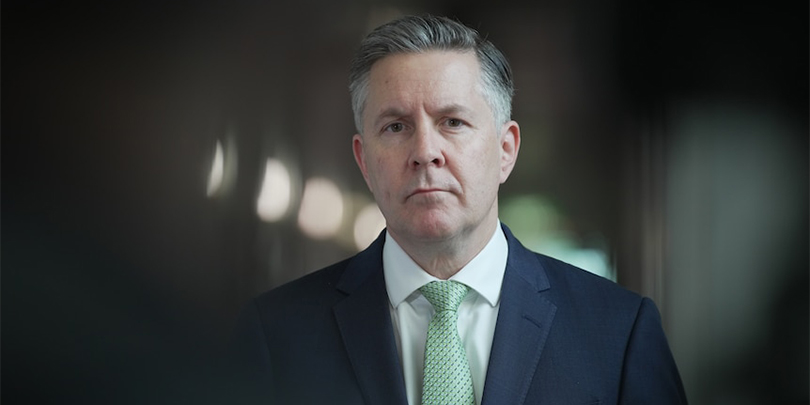
Health Minister Mark Butler has defended the increased use of automated decision-making in the National Disability Insurance Scheme, declaring that automation will play a growing role in administering social programs nationwide. Source: The Australian.
Laying out his vision for greater “budget setting” in the 760,000 custom and highly variable NDIS plans as a way to achieve the government’s $185 billion in projected savings, Mr Butler said he was both proud and overwhelmed to be taking on the biggest reforms to the scheme in its history.
It follows the Labor powerbroker last month unveiling plans for 160,000 people to be diverted away from the NDIS over the next 10 years and reverse plummeting community confidence in the $56 billion-a-year scheme.
Mr Butler told The Australian’s The Front podcast that the lessons of Robodebt were “front of mind” when bringing in more automation to the NDIS.
“I think there’s automation in pretty much all social programs, even if that’s the processing of payments at some level, and we are going to see more opportunity for that in the future,” he said.
“You’re seeing that in the private sector, you will see that in public sector.
“(We will be) making sure that we’re careful about the risks, that humans are always in the loop in making important decisions.”
Mr Butler said he understood concerns around automation in social programs after the “painful, sometimes tragic experience” of Robodebt, which was laid bare through a royal commission launched by Labor to scrutinise the ultimately unlawful automated debt collection practices taking place under the then Liberal government.
A key challenge identified by Mr Butler in reducing the annual growth of the NDIS to five per cent by 2030 was the sheer unpredictability in individual plan budgets that ranged from less than $20,000 a year to more than $1 million for those with the highest needs.
“One of the things we want to achieve … is having consistency, not just about the details of the plan, but predictability about budgets, and so budget setting plan by plan,” he said.
The sustainability of the disability program will become a bigger part of decision-making under Labor’s proposed legislation, due to pass with the support of the Liberals in the coming weeks, along with other factors such as a person’s eligibility for mainstream services and what family supports are available to them.
FULL STORY
Mark Butler defends automated decision-making for NDIS (By Sarah Ison, The Australian)