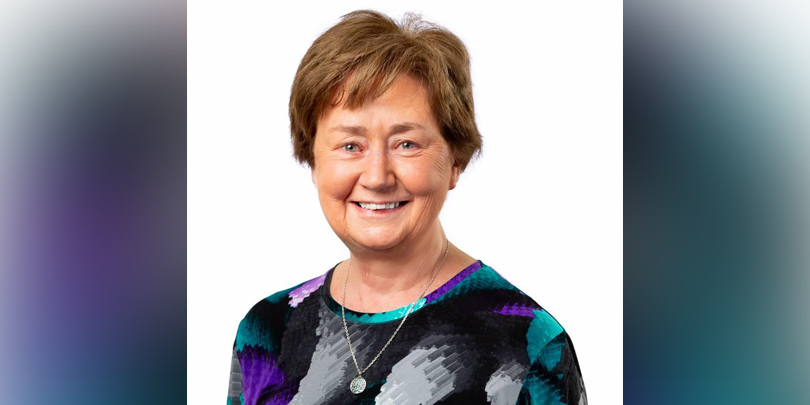
Humanity is at a crossroads, facing both an ecological crisis on a warming planet and the anthropological predicament of humanity’s future in relation to artificial intelligence, writes Sr Adele Howard RSM. Source: Mercy Eco Communications.
Pope Leo, in his Magnifica Humanitas, encyclical exercises his deep concern “to safeguard and value the grandeur of humanity that has been given to us as gift.”
While Pope Francis in Laudato Si’, with his understanding of integral ecology and the technocratic paradigm, called all people of goodwill to care for Earth, our common home, the focus of Magnifica Humanitas is about preventing the domination of AI over humanity and “building a world in which everyone can flourish”.
Taking a perspective from Oceania, Australia has 278 data centres, essential for storage and processing of AI technologies, and is a key global location for new digital infrastructure.
Companies such as Microsoft and Amazon Web Services recently committed to multibillion-dollar investments here, attracted by our political stability, security and vast landscape.
Data centres, while using copious amounts of electricity and water, require large quantities of lithium batteries and diesel-fuelled backup generators. These are serious concerns for environmental safety and air quality in residential neighbourhoods where local communities, deprived of consultation, are confronted by noise, visual pollution and fire risk.
AI data centre investors are not legally mandated to generate their own renewable energy, despite the serious work being undertaken in Australia to foster renewable energy sources. Nor are they required to consider the available water resources in this arid country.
Magnifica Humanitas is a clear teaching about the guiding principles to be used in the face of the benefits and costs of AI developments. These principles – the common good, the universal destination of goods, subsidiarity, solidarity and social justice – have been outlined by Pope Leo from the long tradition of Catholic Social Teaching.
Ethical guardrails and regulations need to be developed swiftly in relation to the power and intelligence of AI computer models.
It is because of their power, writes Pope Leo, that they require “a new spiritual, ethical and political framework”.
There also needs to be greater transparency and public awareness of the vast depletion of natural resources that are going to be an outcome of the building and use of these data centres.
As with climate change and environmental challenges, what is at stake here is the future of humanity and the planet.
Therefore, the guidance of these AI developments cannot be left to market forces alone, nor to a handful of extremely wealthy and powerful AI-related owners and their companies.
Sr Adele Howard is a Sister of Mercy and a member of the Dicastery for Promoting Integral Human Development‘s Theology from the Peripheries’ Scientific Committee.
FULL STORY
‘A global Guide to the Crossroads of AI in the Age of Ecological Crisis’ (By Sr Adele Howard RSM, L’Osservatore Romano via Mercy Eco Communications)