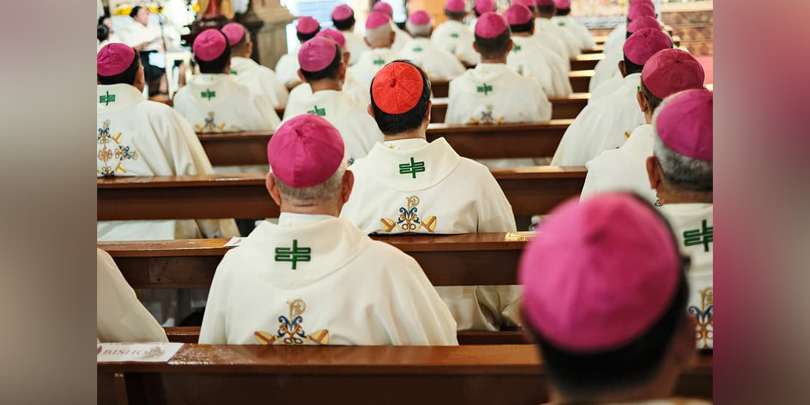
Filipino bishops are pushing back against deeply ingrained folk beliefs about mental health in a pastoral letter issued this week. Source: Crux.
In the pastoral letter, the bishops tackle widespread misconceptions including the notion of mental illness as a signal of divine punishment.
The pastoral letter was the bishops’ first about mental health, a sign that the country’s 83 active bishops are treating the problem with greater urgency.
The Catholic Bishops Conference of the Philippines issued the pastoral letter following its 132nd plenary assembly, its highest decision-making body, from July 8 to 10.
“Mental illness is not a sign of weak faith,” the bishops write, “not a punishment from God.”
“Like any illness,” the CBCP letter states, “it deserves understanding, appropriate care, and compassionate accompaniment.”
The CBCP published the letter, signed by the conference’s president, Archbishop Gilbert Garcera of Lipa, on Monday
“Every person, whatever his or her condition, is created in the image and likeness of God and possesses an inalienable dignity that no illness can ever take away,” the bishops say.
The Philippines, the world’s third biggest Catholic-majority country, is suffering a silent mental health crisis, with many Filipinos refusing to seek medical aid because of the stigma attached to mental illnesses.
Based on the 2021 Philippine National Survey on Mental Health and Wellbeing, about 14 per cent of Filipino adults have “developed at least one mental health problem during their lifetime.” About 22 percent of the population has attempted suicide at least once.
Yet only 5 per cent of those with mental health disorders – a “very low” proportion – have sought mental health services such as counselling, medication, and hospital confinement.
The 2021 Philippine study said that “stigma and violations of human rights directed toward people with these disorders compound the problem.”
Much of the stigma arises from superstitious beliefs, stemming from a mix of Catholic and folk religiosity – a common kind of syncretism in the Philippines, which was dominated by folk religion before it was colonised by Catholic Spain about 500 years ago.
FULL STORY
Filipino bishops fight stigma of mental illness (By Paterno R. Esmaquel II, Crux)