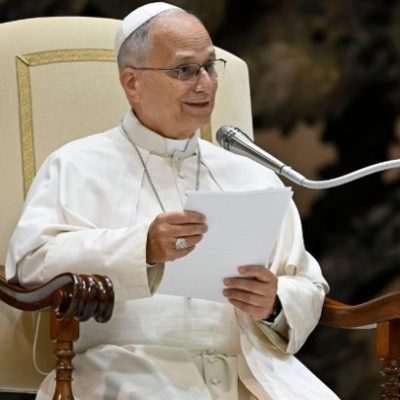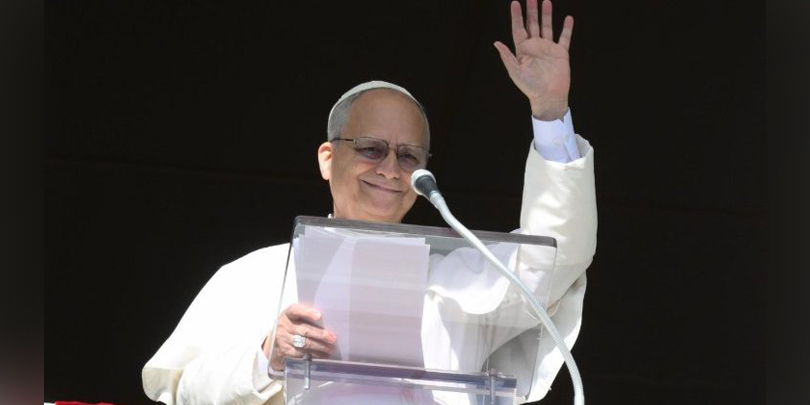
God gives hope to those whom the world discards as desperate, Pope Leo XIV said yesterday during his midday Angelus address in the Vatican. Source: Vatican News.
Recalling the day’s Gospel reading from Matthew on the Beatitudes, the Pope said that Jesus announces Good News for all humanity.
“These are, in fact, lights that the Lord kindles in the darkness of history, revealing the plan of salvation that the Father accomplishes through the Son, with the power of the Holy Spirit.”
On the mountain, Christ gives the disciples a new law written in the heart, no longer on stone, “that renews our lives and makes them good, even when the world seems to have failed us and is full of misery”, the Pope said.
Only God, Leo said, “can truly call the poor and afflicted blessed, because he is the highest good who gives himself to all with infinite love,” only he “can satisfy those who seek peace and justice, because He is the just judge of the world, the author of eternal peace.”
“Only in God do the meek, the merciful, and the pure of heart find joy, because he is the fulfilment of their expectations,” and in persecution, they find redemption, and in falsehood, they find “an anchor of truth”.
The Pontiff acknowledged the Beatitudes may seem paradoxical to those who expect the powerful to always rule the earth.
“Those who are accustomed to thinking that happiness belongs to the rich may believe that Jesus is deluded. However, the delusion lies precisely in the lack of faith in Christ,” he said.
Yet, he marvelled that Christ is “the poor man who shares his life with everyone, the meek man who perseveres in suffering, the peacemaker persecuted to death on the cross.”
“In this way, Jesus illuminates the meaning of history. It is no longer written by conquerors, but rather by God, who is able to accomplish it by saving the oppressed,” stressing, “God gives hope especially to those whom the world discards as desperate.”
FULL STORY
Pope at Angelus: Beatitudes can become a measure of happiness (By Deborah Castellano Lubov, Vatican News)