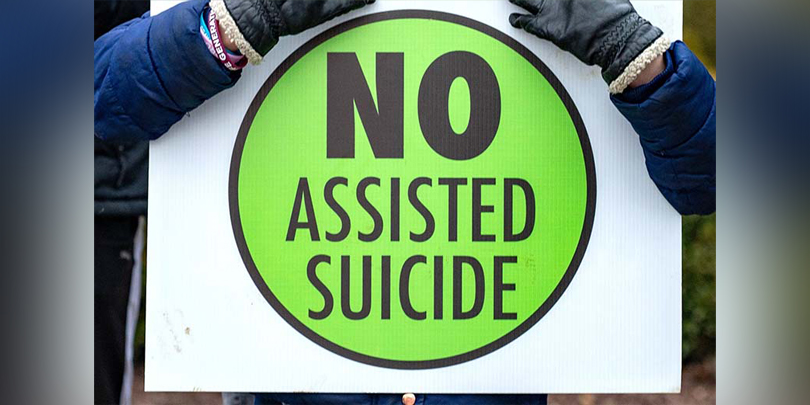
The bishops of Scotland have expressed concerns over the government’s response to amendments that would protect faith-based organisations’ and hospices’ objections to assisted suicide. Source: OSV News.
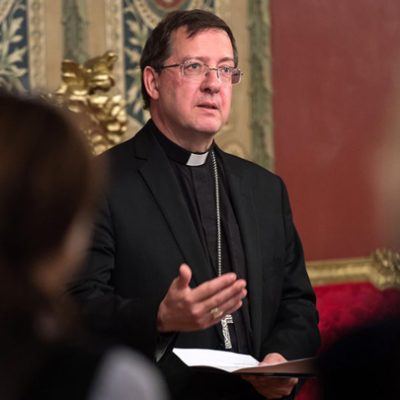
In a statement published last week, Bishop John Keenan of Paisley, president of the Scottish bishops’ conference, said the country’s bishops disagreed with the government’s assertion that it was unclear “how an institution might demonstrate what their ‘conscience’ position is”.
Every organisation, he wrote, “has guiding values that shape its mission and practice.”
“The bishops’ conference maintains that no organisation should be compelled by the state to participate in the deliberate ending of life when doing so would violate its ethical or religious principles,” Bishop Keenan said.
Introduced in March 2024 by Scottish parliamentarian Liam McArthur, the Assisted Dying for Terminally Ill Adults (Scotland) Bill would allow eligible adults “to lawfully request, and be provided with, assistance by health professionals to end their own life.”
According to the bill, eligibility requirements include a person who is 18 years of age or older, terminally ill, and must “have sufficient capacity to make and understand the decision.” The bill was amended recently to raise the minimum age from 16 to 18.
With the final vote expected to take place on Tuesday, two parliamentarians – John Mason and Paul O’Kane – introduced amendments that would allow health care providers, faith-based institutions, charities and educational establishments to not participate or facilitate assisted suicide.
The proposals would also ensure that organisations that objected would not be “subject to any detriment, financial loss, regulatory sanction, or legal action”.
However, politicians supported a measure removing those protections.
Joining the bishops in their criticism was the pro-life group Right to Life UK, which said that removing protections for those who object meant that there would be “no accountability or oversight from MSPs (Members of the Scottish Parliament) and those who will be directly affected by the bill if it becomes law”.
A group of medical professionals also expressed similar concerns, saying that it raised “important questions about transparency, accountability, and the robustness of the legislative process.”
FULL STORY
Scottish bishops urge recognition of conscientious objection over assisted suicide bill (By Junno Arocho Esteves, OSV News)