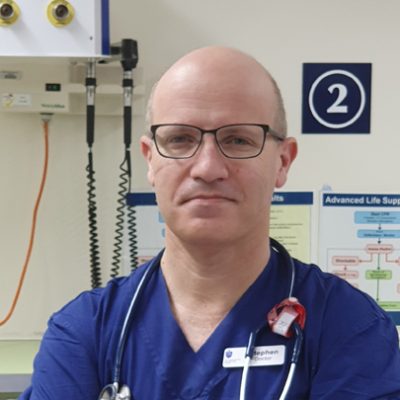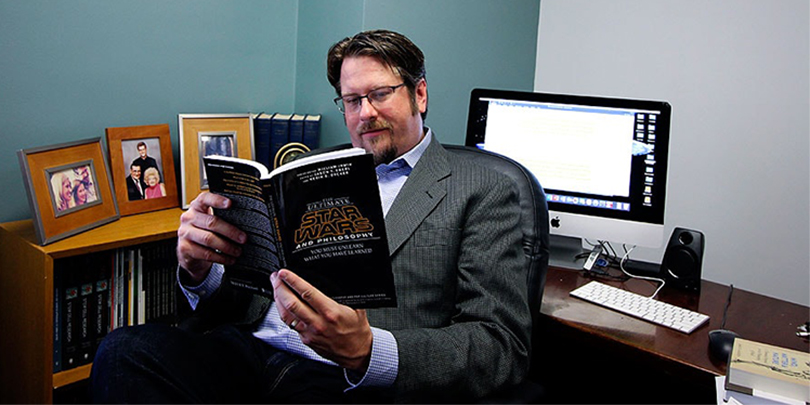
One of the leading scholarly critics of the rising transhumanist movement will deliver this year’s Plunkett Lecture in Sydney. Source: ACU.
Jason T. Eberl, from Saint Louis University, will examine the ethical risks of transhumanism, a philosophical movement that embraces the use of biotechnology to enhance and evolve the human species into “posthumans”.
Delivering the free Plunkett Lecture in Darlinghurst, Professor Eberl will draw on his prolific research into transhumanism to ask if enhancing human beings is possible, desirable or even ethical.
Professor Eberl will use Thomas Aquinas’s understanding of human nature and flourishing to critique the various forms of human enhancement advocated by transhumanism, including physical, cognitive, and moral enhancements.
“The transhumanist movement challenges us to reaffirm the fundamental shared nature of all human persons and an objective understanding of what it means for human persons to flourish,” Professor Eberl said.
“While novel biotechnologies and AI are not, in themselves, something to fear, we must tread carefully in our moral assessment of how such technologies may impact human lives and well-being, both individually and collectively.
“Although classical thinkers such as Thomas Aquinas could not have envisioned the technological breakthroughs confronting us today, the perennial wisdom found in their philosophical and theological writings provides a rich set of metaphysical and ethical guidelines for evaluating the proper use of such technologies.”
Professor Eberl is the Hubert Mäder Chair in Bioethics, Professor of Philosophy, and Director of the Albert Gnaegi Center for Bioethics at Saint Louis University in Missouri.
A self-confessed lover of sci-fi, Professor Eberl is known for addressing the ethical risks and potential benefits of human enhancement using pop culture references, including Star Trek cyborgs and the humanoids of Battlestar Galactica.
His lecture on April 8 follows the release of the Vatican’s International Theological Commission’s newest document, Quo vadis, humanitas? which responds to the anthropological consequences of the transhumanist and posthumanist movements.
Hosted by the Plunkett Centre for Ethics – a joint initiative of Australian Catholic University, St Vincent’s Public Hospital Sydney, St Vincent’s Private Hospital Sydney, the Mater Hospital Sydney, Calvary Healthcare Limited, Mercy Hospital in Melbourne and Cabrini Hospital in Melbourne – the annual lecture series welcomes world leaders to address growing concerns in healthcare ethics.
Plunkett Centre director Dr Xavier Symons said Professor Eberl’s lecture was timely given recent developments in artificial intelligence and biotechnology.
Details and registrations: 2026 Plunkett Lecture: Enhancing Human Beings – Possible? Desirable? Ethical?.
FULL STORY
US bioethicist to probe rising transhumanist movement at 2026 Plunkett Lecture (ACU)