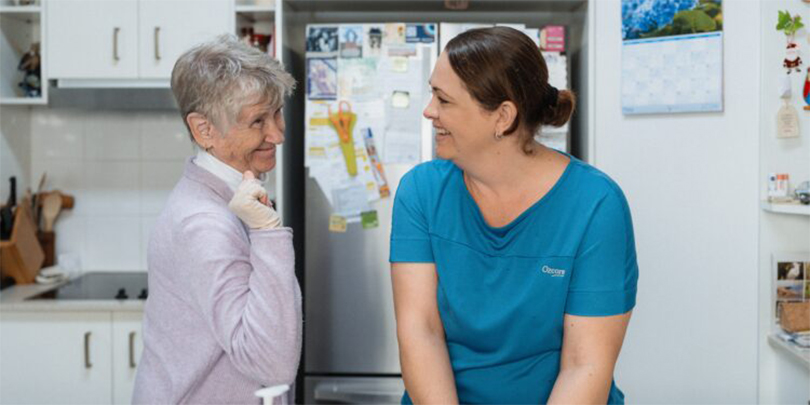
Queensland’s ageing population is growing, and with advancements in technology and medicine, providers are now turning their attention to at-home support. Source: The Catholic Leader.
“Support at home is a really critical model to get right,” Ozcare chief executive Kevin Mercer said.
It was imperative to meet the needs of an ageing population over the next 10 to 20 years, he said.
Between 2017 and 2025, the number of people using home care rose 307 per cent, from 71,900 to 293,000, according to GEN, which is operated by the Australian Institute of Health and Welfare and funded by the Department of Health, Disability and Ageing.
Ozcare is a subsidiary of the St Vincent de Paul Society Queensland and has just celebrated three decades of providing aged care.
“Thirty years is something that we’re very excited about celebrating at Ozcare and we’re very proud of our heritage and connection to Catholic aged care services,” Mr Mercer said.
The organisation is now on a new page of its progress.
Ozcare’s change strategy comes shortly after the Aged Care Act 2024 came into force in November 2025, replacing the 30-year-old Aged Care Act 1997.
It requires providers to involve older people in planning their own care under strengthened quality standards. The reform follows the 2021 Royal Commission into Aged Care Quality and Safety.
Mr Mercer said it was a necessary change.
“I think probably the biggest change in that Aged Care Act is introducing Support at Home … that was really turning a community care service on its head,” Mr Mercer said.
“We still had community care packages, but what the Support at Home [program] does is allow more choice and control from the care recipient into those decisions around their care and the services they receive, which is a very different model for providers.”
He said the aged care population was increasing and would live longer than previous generations.
So, it was about supporting people “to be able to enjoy that longevity and enjoy those years”.
“With the technology, and advancements in medicine and treatment, more people are able to age at home,” he said.
Residential aged care often supported people with extreme needs including behavioural issues, complex dementia or palliative care.
Mr Mercer was clear that aged care was a human service.
“People helping people … that relationship is critical,” he said.
FULL STORY
Aged care sector navigating AI, robots and new frameworks (By Kymberlee Gomes, The Catholic Leader)