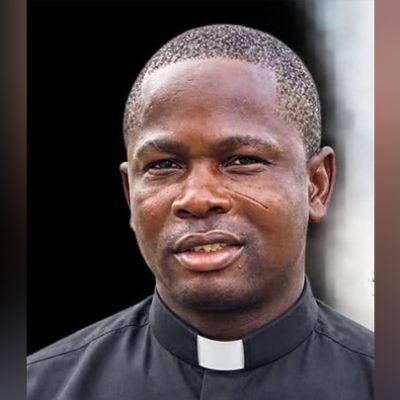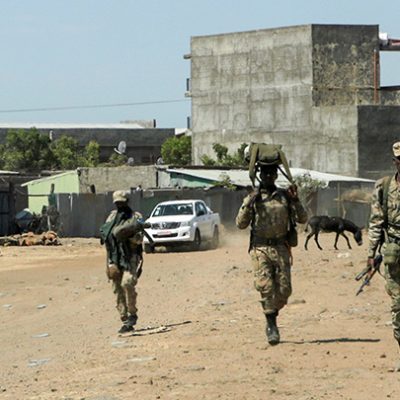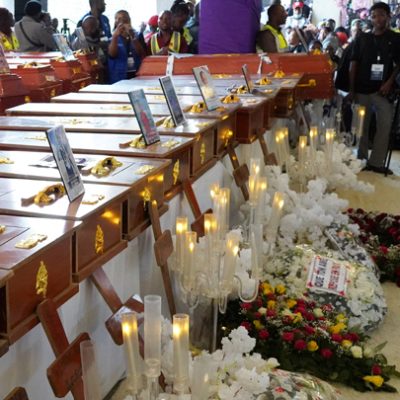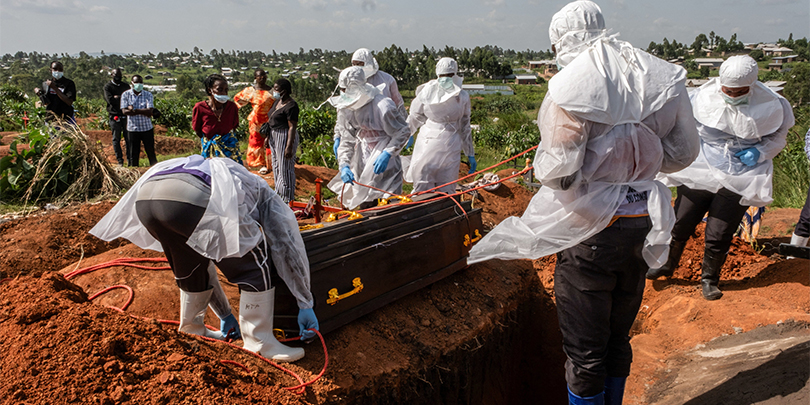
As the Democratic Republic of the Congo confronts a rapidly worsening Ebola outbreak, communities and health workers face the crisis amid conflict, displacement and an already fragile healthcare system, writes Br Nicaise Mundurame CSsR. Source: Common Home TV.
Since May 15, the DRC government has officially declared a major resurgence of Ebola virus disease, the country’s 17th outbreak, caused by the rare Bundibugyo strain, the fastest-spreading and most virulent in the nation’s history.
Starting in Ituri province, the epicentre in the northeast of the country, the disease has spread to five other provinces: North Kivu, South Kivu, Tshopo, Haut-Uele, and Bas-Uele.
The toll: more than 2700 deaths and 6800 confirmed cases. The government has responded with checkpoints, quarantine, screening, and a ban on handling corpses. None of it has stopped the spread.
The population, especially in the infected zones, does not trust the government and is not cooperating with it. That is a serious problem: containing an outbreak this fast depends on public discipline and public trust. Without it, the virus will keep spreading, inside the DRC and beyond its borders.
At this stage of the epidemic, the Catholic Church in Congo is a major actor: it has the access, the trust, and the media reach that the government lacks.
It also does what no health ministry can do – it walks with grieving families, supports the vulnerable, and offers a spiritual presence in communities living with fear and loss.
The response so far has leaned on awareness campaigns, infection prevention, community engagement, and support for local health structures, with only partial media coverage.
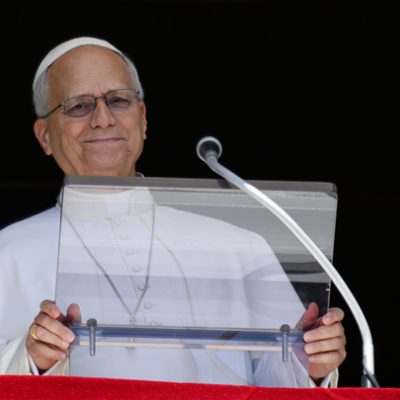
Pope Leo XIV has called for urgent international mobilisation against the epidemic, and stressed that local communities need to be part of prevention efforts.
Caritas Congo has pressed for closer coordination between Church structures, public authorities, and technical, financial, and humanitarian partners.
In June, 130 religious leaders and pastoral agents held a briefing on communication and community engagement. Ebola continued to spread.
The Congolese population trusts the Church far more than it trusts the state. The Church also runs the country’s largest media network, more than 80 radio and television stations, reaching further than any other institution in the DRC.
In a country with bad roads and weak digital infrastructure, radio and television are often the only way to reach people. That’s what makes the Church best positioned to rebuild public confidence and drive the awareness campaign the outbreak demands.
Br Nicaise Mundurame CSsR is Common Home TV’s Africa bureau chief
FULL STORY
Ebola outbreak in DR Congo outpaces efforts to contain it (By Br Nicaise Mundurame CSsR, Common Home TV)