Australian researchers say people with an incurable blood cancer can still flourish, finding meaning, connection and personal growth even as death approaches and uncertainty grows. Source: The Catholic Weekly.
Most people have never heard of multiple myeloma, but every year nearly 3000 Australians are diagnosed with this life-limiting blood cancer. It can lead to infections, broken bones, kidney problems, anaemia, and possibly death. With modern drugs, it is treatable – but it is not curable.
How do doctors and patients deal with the distressing news that they have multiple myeloma?
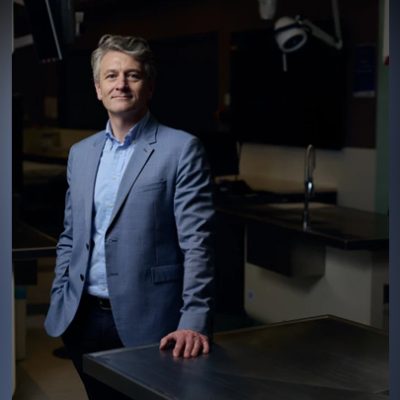
Not well, according to Xavier Symons, director of the Plunkett Centre at Australian Catholic University, and colleagues, the authors of a recent article in the journal Supportive Care in Cancer.
“What we found in the study is that, generally, health professionals are not doing an especially good job of these conversations [about life-limiting illness], and it’s not just because they’re completely tone deaf,” Dr Symons said.
“It’s because they are reluctant to raise the topic because of fear of making the situation worse,” he said.
“They don’t want to alarm the patient. But the irony is, of course, that the patient has been diagnosed with a life-limiting illness. It’s probably like the worst possible news they can get.”
The underlying problem highlighted by Dr Symons and his co-authors is that people don’t believe that a patient’s last months can be a fulfilling and fruitful time. But with death approaching, there are many opportunities for personal growth.
“Flourishing – encompassing emotional, psychological, and social well-being – remains achievable even toward the end of life,” they write.
The findings also have implications for debates about voluntary assisted dying, Dr Symons said.
“What happens often in the assisted dying discourse is that the discussion ends up focusing on euthanasia as a right, or perhaps as a kind of means by which people can end the situation of intolerable suffering,” he said.
“What doesn’t get discussed is other things we might do to help people who are suffering at the end of life. That’s where our paper comes in, focusing on a particular population group: people with multiple myeloma or smouldering myeloma.
“Patients want to find meaning in their anxiety and suffering, but too often doctors are too absorbed in the nitty-gritty of clinical work to help them.”
FULL STORY
How can we flourish as death approaches? (By Michael Cook, The Catholic Weekly)