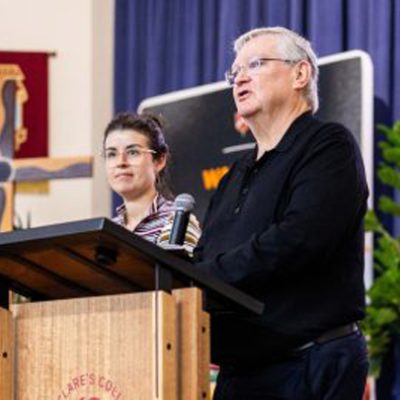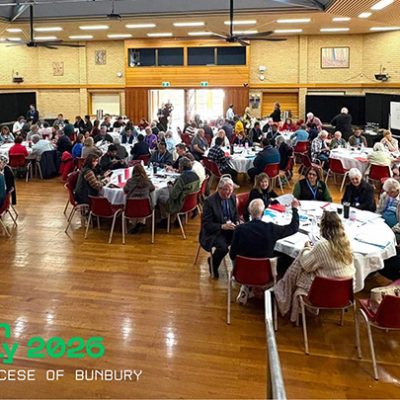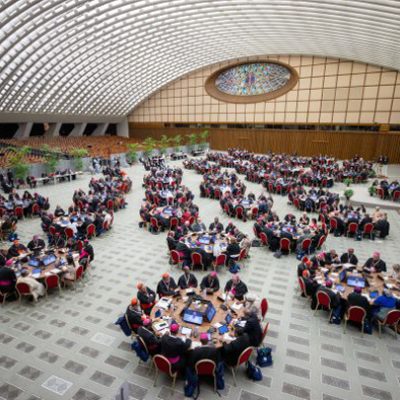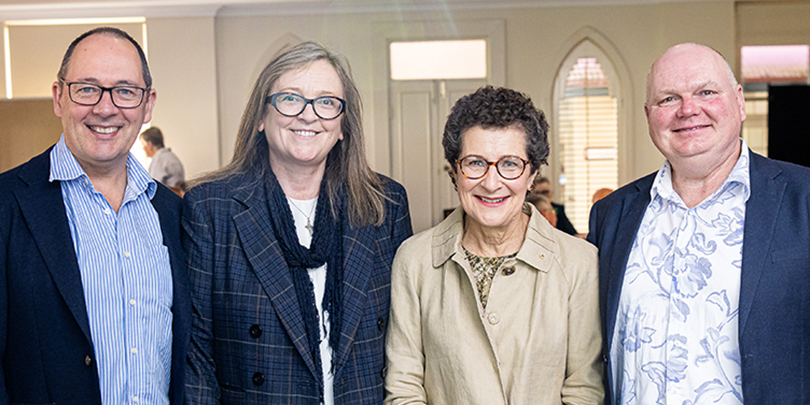
The second Inclusive Governance in a Synodal Church Symposium concluded at Australian Catholic University’s Rome Campus on Friday. Source: Vatican News.
Susan Pascoe, adjunct professor at ACU, organised the symposium, which marked a milestone in a pioneering international research project on lay governance in the Church.
“There are various modes in which lay people, along with their sisters and brothers in consecrated and ordained life, can contribute to decision-making and decision-taking in the life of the Church, whilst acknowledging that in any diocese, the bishop is the decision-maker, and all of these entities operate in communion with the bishop,” Professor Pascoe said.
The research project is moving toward a wider consortium and, in its first year, explored the emergence and operation of lay-led canonical structures, specifically Ministerial Public Juridic Persons (MPJPs), as expressions of synodal governance.
The 2026 symposium was opened by Cardinal Mario Grech, Secretary General of the General Secretariat of the Synod.
The symposium brought together theologians, canon lawyers, researchers, and practitioners from around the world to examine governance models in which Catholic lay people play key decision-making roles in ministries such as education, healthcare, aged care, and social services.
Now in its second year, the Inclusive Governance in a Synodal Church project has identified more than 100 MPJPs or similar bodies across English-speaking countries. Research has highlighted both the canonical robustness and theological richness of these structures, which are seen as living expressions of a post-Vatican II Church committed to shared leadership.
Professor Pascoe said the project derives from the Synod on Synodality and is now in its implementation phase.
She noted that lay participation can take many forms, from pastoral councils and diocesan finance councils to governance roles in ministerial public juridic persons or associations of Christ’s faithful.
This year’s symposium expanded its consortium of universities and addressed a broader range of topics. Professor Pascoe announced plans for the 2028 edition.
“We hope to bring together lay people, consecrated, ordained members of the episcopacy, and scholars in a synodally planned and implemented forum.”
FULL STORY
Inclusive Governance in a Synodal Church Symposium concludes in Rome (By Deborah Castellano Lubov, Vatican News)