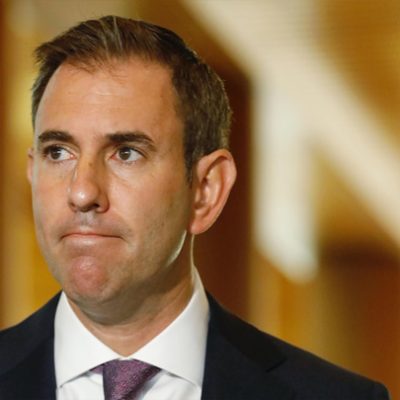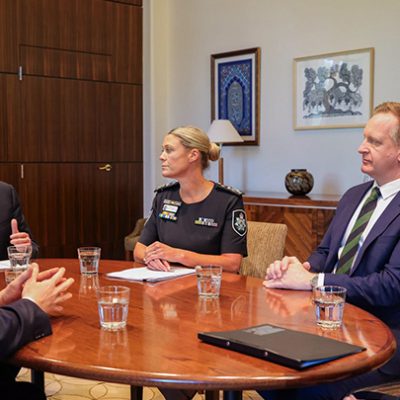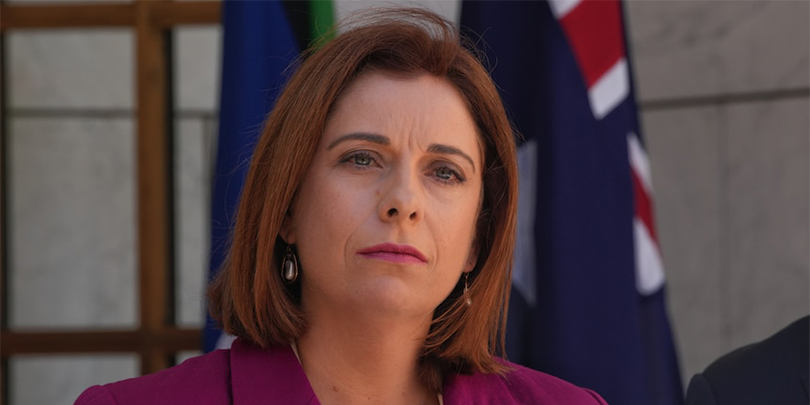
Communications Minister Anika Wells has hit back at Coalition criticism that Labor’s proposed digital safety laws would provide a backdoor to regulate speech. Source: The Australian.
The Albanese Government will today unveil draft legislation for its proposed digital duty of care, placing the onus on platforms and online services to remove content posing a “seriously harmful threat to public safety”.
In a May consultation paper, Labor stopped short of explicitly defining what constitutes such content, instead listing examples such as image-based abuse, the promotion of violent extremism, and child sexual exploitation material.
Crucially, the paper proposes granting the communications minister – or the eSafety Commissioner acting as the minister’s delegate – the power to designate additional categories and types of harm via ministerial direction, enabling future governments to broaden the laws without amending the primary legislation.
Although any direction could be voided by a disallowance motion passed by Parliament within 15 days, the proposal has raised concerns among some legal academics and civil liberties advocates who warn that the power could be used to regulate speech.
Those concerns have been echoed by the Coalition, with Angus Taylor warning the proposal could amount to an attempt to “censor social media”, while Opposition communications spokeswoman Sarah Henderson has drawn comparisons to Labor’s aborted misinformation and disinformation bill.
Ms Wells yesterday rejected the Coalition’s concerns, arguing parliamentary scrutiny would apply.
“This isn’t about censorship. This is about … making big tech identify the risks on their own platform and making big tech mitigate against those risks on their platform,” she told Channel 9.
Asked who would determine what constituted harmful content, Ms Wells said the laws would be “subject to parliamentary scrutiny” and stressed that “common sense” would dictate what qualified as online harm.
“It’s exactly the kind of things you’d expect,” she said. “Trying to prevent children from seeing pornography online, being groomed online … a digital duty of care is designed to put the onus on big tech to make their own platforms safe.”
Greens communications spokeswoman Sarah Hanson-Young, meanwhile, has voiced support for enabling the minister to designate additional types of online harm, arguing the measure could complement harms already defined in the legislation.
FULL STORY
Anika Wells rubbishes Coalition’s censorship fears over digital duty of care (By Jack Quail, The Australian)