Bishops in the Philippines have thrown their weight behind a nationwide signature campaign to pass a law banning political dynasties, which have dominated the country’s politics over the past century. Source: Crux Now.
The lay-initiated signature drive, called Dapat Isa Lang (One Is Enough), seeks to prohibit politicians from the same family from simultaneously occupying public office. The campaign’s proponents aim to use the “people’s initiative” mechanism to enact this anti-dynasty law.
Under the country’s 1987 Constitution, citizens can pass a law by gathering the signatures of 10 per cent of registered voters to launch a national referendum. This people’s initiative mechanism effectively bypasses Congress, which is dominated by political dynasties and is unlikely to act against their interests.
Organisers admit it is a daunting task to gather and validate the required number of signatures: at least 7.1 million, a tenth of the current figure of 71 million registered voters.
Another challenge is ensuring that the signatures represent 3 per cent of voters in each of the country’s 254 legislative districts – a constitutional requirement.
Faced with these hurdles, proponents of Dapat Isa Lang are turning to the Catholic Church to reach millions of Filipinos at the grassroots level.
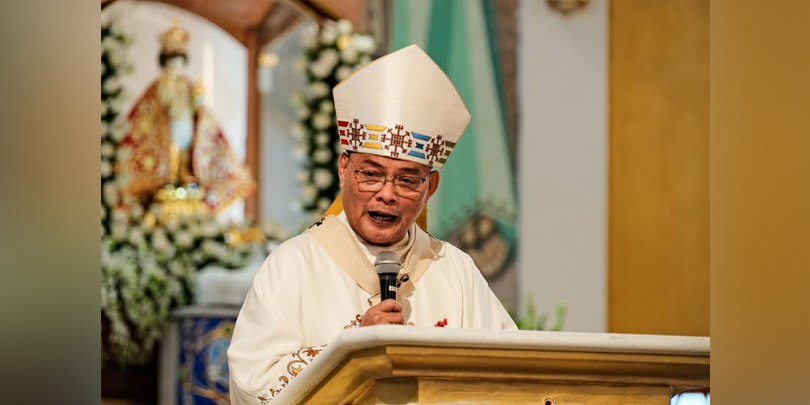
In a pastoral statement on Friday, Philippines bishops conference president Archbishop Gilbert Garcera said the bishops “encourage our dioceses, parishes, Catholic schools and universities, religious communities, lay organisations, and all people of goodwill to support the Dapat Isa Lang People’s Initiative and to help our people understand its purpose and provisions”.
“Public office must never become a family inheritance. It is a public trust, entrusted by the people to serve all,” Archbishop Garcera said.
He said that, beyond the question of competence among political clan members, “the deeper concern is a system that allows political power to concentrate and be repeatedly passed among members of the same families, narrowing opportunities for other qualified citizens, weakening genuine political competition, and making accountability more difficult.”
He said this is why political dynasties “are not merely a political question” but “are also a moral and ethical concern.”
FULL STORY
Filipino bishops back signature drive to ban political dynasties (By Paterno R. Esmaquel II, Crux Now)