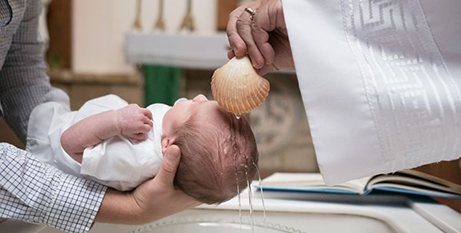
Europe’s data protection rules may require the erasure of personal data from Catholic baptismal records when an individual requests it, a top European Union official said yesterday. Source: EWTN News.
The October 1 opinion from Laila Medina, the advocate general at the Court of Justice of the European Union, could prove decisive in a dispute between the Catholic Church and European leaders over whether or not baptismal records can be preserved in Church registers.
The Court of Justice is considering the case, which was brought by the Brussels Court of Appeal and which asked for clarification about whether the Ghent Diocese’s refusal to erase names from baptismal records when requested is in violation of Europe’s General Data Protection Regulation.
Catholic leadership has expressed strong concerns over the issue. The Commission of the Bishops’ Conferences of the European Union said in September that baptismal records are not merely a “list of members” of the Church but rather serve as a “record of historical events.”
Allowing baptismal record erasures would “constitute an infringement on the substance of the sacrament” and would “seriously impede” the functioning of the Church, the bishops said.
Pope Leo XIV has also expressed concern in the debate, having reportedly told the European bishops in May 2025 that he “considers the issue very important.”
In her opinion, which is non-binding on the justice court, Ms Medina said European data rules apply to the case and that the “data processing in question,” the baptismal records, “must be in line” with those rules.
The Catholic Church must demonstrate “compelling legitimate grounds” for retaining someone’s name in the baptismal records after the person rejects, Ms Medina said.
The Ghent Diocese had originally responded to the individual’s deletion request by striking through his name but still retaining his entry in a legible form. That measure, Ms Medina said, “does not constitute erasure” under European data rules.
“The data must be rendered illegible to the extent necessary to ensure that the person is no longer identified or easily identifiable,” she said. She argued that “information concerning the fact that a baptism took place at a given place and time may be retained.”
Though the report is non-binding, advocate general opinions often help shape the outcome of cases in European courts. A ruling is expected later in 2026 or in 2027.
FULL STORY
European data rules may allow erasure of baptismal records, EU court adviser says (By Daniel Payne, EWTN News)