Australia’s former ambassador to the Holy See reflected on the late Pope Francis’s interfaith legacy at the annual ACU Parliamentary Interfaith Breakfast in Canberra.
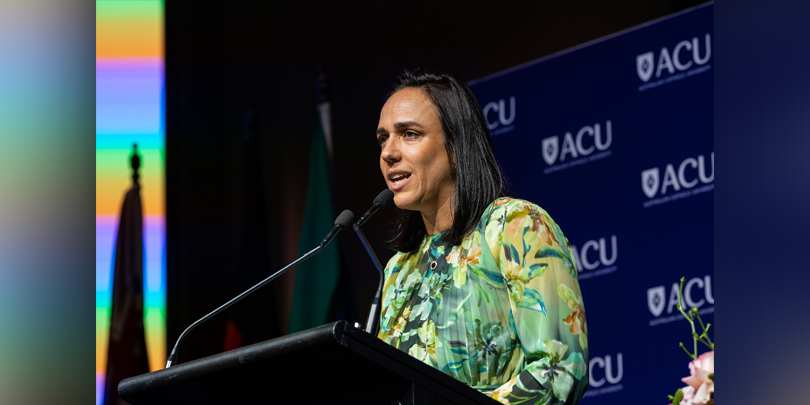
Speaking at Parliament House yesterday to nearly 250 guests, including leaders from Australian faith and religion communities and parliamentarians, Chiara Porro offered insights into Pope Francis’s friendship with other religions, which was central to his papacy.
From his historic first-ever papal visit to the Arabian Peninsula, where he co-signed the Document on Human Fraternity, to being the first pope to celebrate Mass with persecuted Christians and Muslims in Iraq, the late pontiff saw interfaith relations as a sacred act.
“There are few other world leaders that are as recognisable and as influential as the Pope,” Ms Porro said.
“Pope Francis in particular – who was the Pope during my time – built a following among Catholics and non-Catholics alike, had the ear of presidents and prime ministers, who often sought his counsel.”
During her four-and-a-half years as Australia’s ambassador to the Holy See, Ms Porro said Pope Francis had transformed Rome into a faith hub for all religions.
“Pope Francis’s papacy was focused on building bridges, and he transformed Rome into a faith hub – a crossroads – offering a unique insight into the role religion plays globally,” she said.
“I met regularly with the Archbishop of Canterbury, members of the World Jewish Congress, and Muslim leaders – who were passing through for interfaith conversations and engagements with the Pope on an almost weekly basis.”
Ms Porro said her experience in Rome had revealed the importance of finding faith in diplomacy.
“We know that religious belonging remans a strong driver and mobiliser in many parts of the world,” Ms Porro said.
“On many occasions, the most influential communication channels are those that involve religious leaders.”
The 2026 ACU Parliamentary Interfaith Breakfast, co-sponsored by Speaker of the House of Representatives, Milton Dick, was one of the largest gathering of faith leaders and community members in the event’s 12-year history.
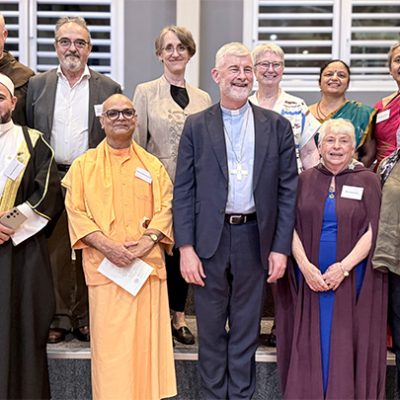
Religious leaders represented diverse faith and belief groups including Christian, Muslim, Jewish, Baháʼí, Buddhist, Sikh, and Hindu.
ACU Vice-Chancellor and President Zlatko Skrbis said interfaith gatherings were a powerful response to rising tensions that threatened Australia’s social cohesion.
“The power of interfaith dialogue is that it can bring different people into the same room, and around the same table, close enough to hear one another. Face to face, we’re more likely to choose our words with care – and the way we speak to one another matters,” Professor Skrbis said.
FULL STORY
(ACU)