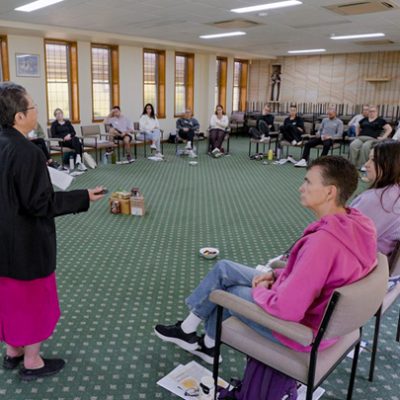
The Fair Work Commission’s 2026 Annual Wage Review decision is a positive outcome for low-paid workers and their families, writes Bishop Columba Macbeth-Green. Source: ACBC Media Blog.
At a time when many in our society continue to struggle with rising housing, food and energy costs, the commission’s decision to increase award wages by 4.75 per cent and the National Minimum Wage by six per cent will assist many low‑paid households facing sustained cost‑of‑living pressures.
Pope Leo XIV’s recent encyclical Magnifica Humanitas (Magnificent Humanity) speaks directly to this challenge.
Pope Leo warns us against economic and technological systems that prioritise efficiency and profit ahead of human dignity and which marginalise vulnerable people in the process.
Rather, he says, economic progress should be measured “by the dignity of each person and the good of all peoples”.
The Annual Wage Review decision reflects this vision to the extent that it recognises that low-paid workers should not be left to absorb the continuing erosion of living standards on their own.
From the perspective of Catholic social teaching, work is not only an economic transaction – it is bound to the dignity of the human person and the common good.
Australia’s bishops argued – with the support of Australian Catholic University research – for a real wage increase of five per cent in our submission to the Annual Wage Review, one that would help ensure that workers can live with dignity and share fairly in the prosperity they help to create.
The commission’s decision moves in that direction by recognising that award-reliant workers have experienced a significant erosion in wages over recent years and that the value of their pay should not continue to go backwards.
The decision is especially welcome for the lowest-paid workers.
At the same time, the decision highlights the limits of Australia’s current wage-setting framework.
While the increases broadly stabilise wages against inflation, they do not deliver the stronger real wage growth needed to substantially reduce working poverty or to redress the significant decline in real wages experienced by households since the beginning of this decade.
Our submission argued that the National Minimum Wage should progressively move toward a level capable of lifting the most vulnerable workers above the National Poverty Line, particularly given the significant erosion in real wages experienced in recent years.
While the commission’s decision represents an important step in stabilising the minimum wage, it does not fully achieve that objective. Many workers, especially those supporting children, relying on a single income, or facing high housing and living costs, will continue to experience financial insecurity despite being in full-time employment.
Bishop Columba Macbeth-Green is the Australian Catholic Bishops Conference bishop-delegate for employment relations, and Bishop of Wilcannia-Forbes.
FULL STOYR
Minimum wage decision a fair compromise, but real wage gap remains (ACBC Media Blog)