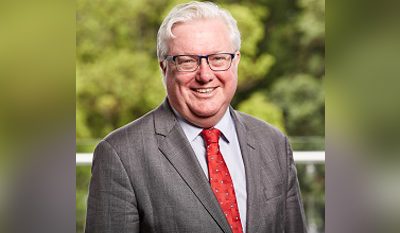
In attempting to solve one problem, a Tasmanian Greens bill to ban conversion practices in the state risks creating several others, writes Hobart Archbishop Anthony Ireland. Source: Hobart Archdiocese.
Dr Rosalie Woodruff MP introduced the Conversion Practices Prohibition Bill 2026 into the House of Assembly on September 10 and it has received its first reading.
Most Tasmanians will never read the bill. They will hear its title and understandably assume that it prohibits what are commonly called “conversion therapies”.
If that were all it did, there would be much on which we could agree.
Practices which are coercive, abusive, or degrading, directed at a person because of sexual orientation or gender identity, should have no place in Tasmania. No person should be humiliated, manipulated, or subjected to harmful treatment intended to force a change in who they are. Where existing laws do not adequately protect people from such practices, those gaps should be addressed.
The concern is that this bill goes considerably further.
It creates a new definition of a “conversion practice” which includes conduct directed towards a person for the purpose not only of changing sexual orientation or gender identity, but of “suppressing” it.
The word suppressing is important because it is not adequately defined. What conduct amounts to suppression? How is the purpose of an ordinary conversation to be determined? Must suppression be the principal purpose of the conduct, or merely one of several purposes?
When legislation carries serious civil and criminal consequences, people should be able to understand where the boundary lies.
There is another unusual feature. The consent of the person concerned does not prevent conduct from falling within the legislation. This means that a competent adult may freely seek counselling or other support, yet the person providing what has been requested could potentially still be exposed to the operation of the bill.
Whatever our views about sexuality or gender, there is an important practical question here. Adults ordinarily choose the counsellors they consult and the kind of assistance they wish to receive. Legislation intended to prevent coercion should be careful not to remove agency from the very people it seeks to protect.
I am particularly concerned about what this could mean in schools. This is not simply a Catholic schools’ issue.
Young people bring complicated questions to school. They talk to teachers, psychologists, counsellors, social workers, chaplains, and wellbeing staff.
Good counselling cannot operate properly if the conclusion must effectively be known before the conversation begins. A counsellor needs to be able to ask questions. A young person must be allowed to say, “I don’t know.” There must be room for uncertainty and accompaniment.
This should concern all schools, social service agencies and the unions to which staff members belong.
FULLS STORY
Protecting people and getting the law right (By Archbishop Anthony Ireland, Hobart Archdiocese)